






 Current location:
What Is a Height Adjustable Desk? Types and How They Work
Author:handyersmart Date:2026-10-07 10:19:36 Click:63
A height adjustable desk is a work table whose surface can be moved up and down, so that the working height changes to suit the person using it rather than the person being made to fit the desk. A fixed desk is built to one height and suits one kind of seated posture; an adjustable desk can be set for a shorter or taller user, for seated or standing work, or for different tasks across the day. That flexibility is simple to state but has real consequences for comfort, for sharing a workspace, and for how a room is used. This article explains what a height adjustable desk is, how the different adjustment systems work, and what to weigh before buying one.
What Is a Height Adjustable Desk?
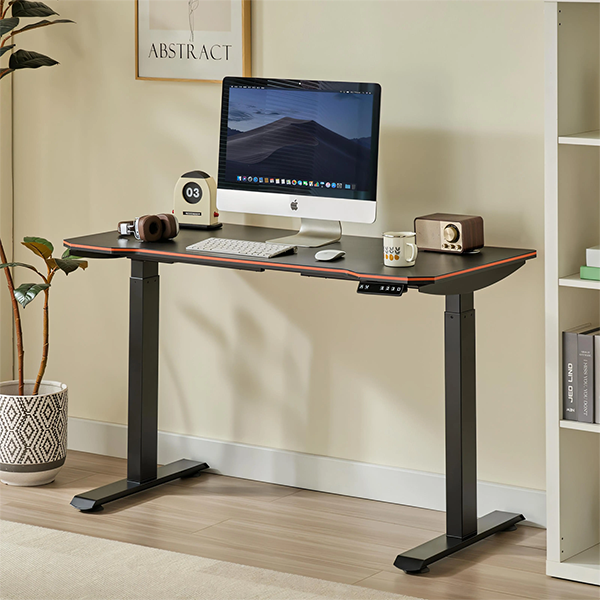
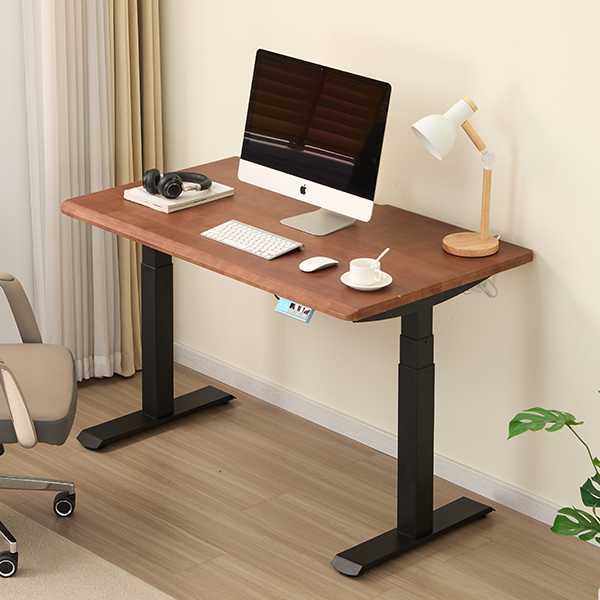
A height adjustable desk is a desk whose working surface can be repositioned vertically within a set range. The adjustment may be performed by hand or under power, and the resulting desk is used for the same work as a fixed desk — computing, writing, reading, meetings — but with the ability to change the surface height as needs require. The term overlaps with "standing desk" and "sit stand desk", which describe the same broad family of height-adjustable furniture from slightly different angles.
The defining idea is that the workstation adapts to the user. Many workspace problems — a screen too low, wrists bent awkwardly, a desk that suits a laptop but not a monitor — come from a mismatch between a fixed surface height and the person at it. A height adjustable desk reduces that mismatch by giving the surface a range instead of a single position.
How the Height Adjustment Works
Height adjustable desks are usually grouped by how the surface is moved. The three common approaches differ mainly in effort, speed and cost.
Manual Adjustment
A manual height adjustable desk is moved by the user's own effort. The simplest version uses a crank or handle that the operator turns to raise or lower the surface. Manual desks need no electricity, are mechanically straightforward, and suit situations where the height is set occasionally rather than throughout the day — a study desk adjusted once for a new user, for example.
Gas Spring and Counterbalance
Some manual desks use a gas spring or counterbalance system to offset part of the desktop's weight. This reduces the force needed to move the surface, so it can be raised with a lighter push. These systems fall between a plain crank and a fully powered desk: still operated by hand, but easier to reposition.
Electric Adjustment
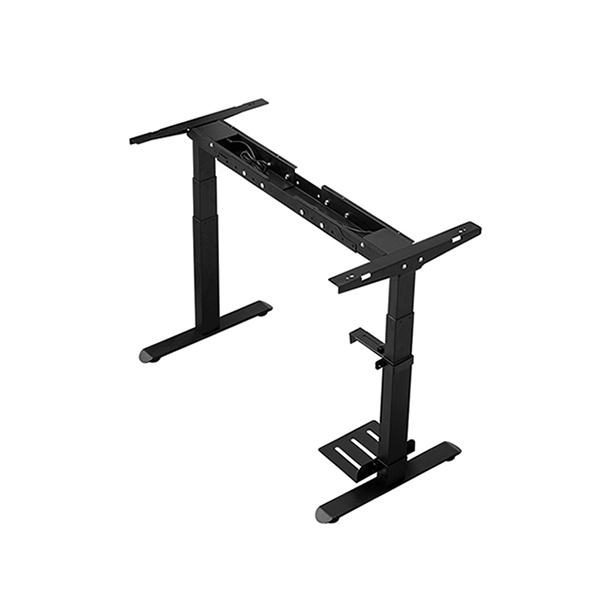
An electric height adjustable desk uses motors to move the surface. Lifting columns contain motorised actuators, and a control box coordinates them so the desktop rises and falls evenly at the press of a button or the hold of a switch. Electric desks are the easiest to use and the most precise, and they are the natural choice where height changes frequently or where several people share one desk. The height adjustable electric desk range shows how the powered version is built around the same idea as the manual one.
The Parts of a Height Adjustable Desk
Whatever the mechanism, an adjustable desk is made of the same few parts:
The desktop — the working surface, in a range of sizes, materials and thicknesses.
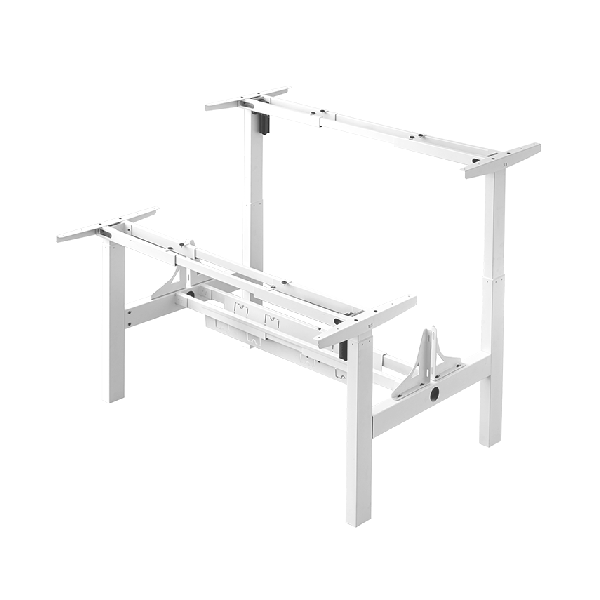
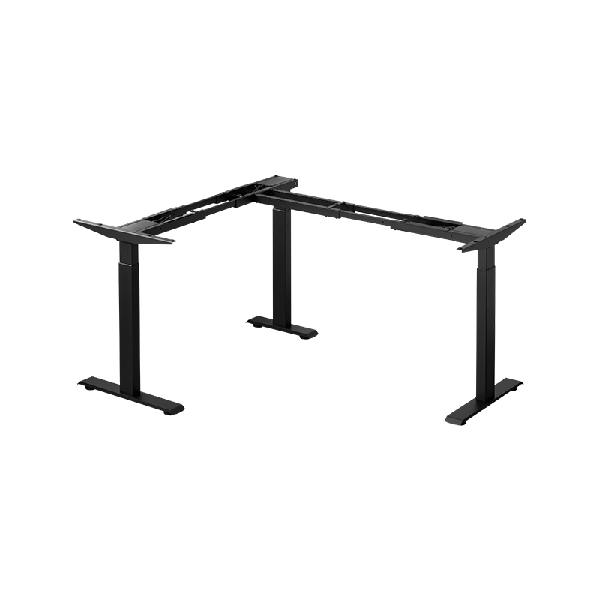
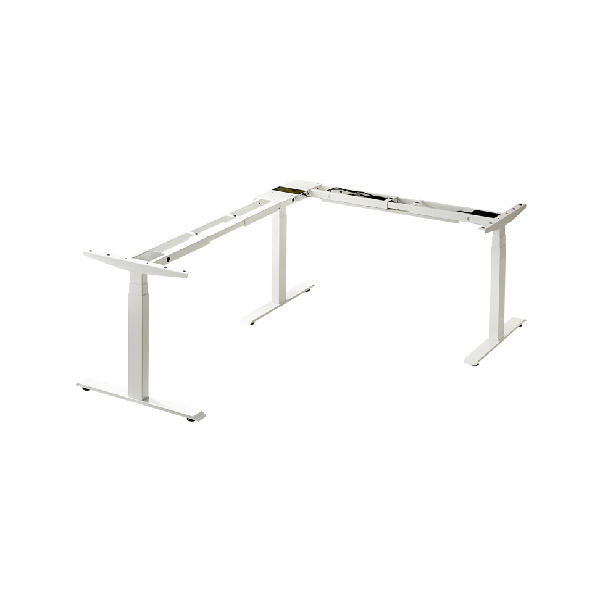
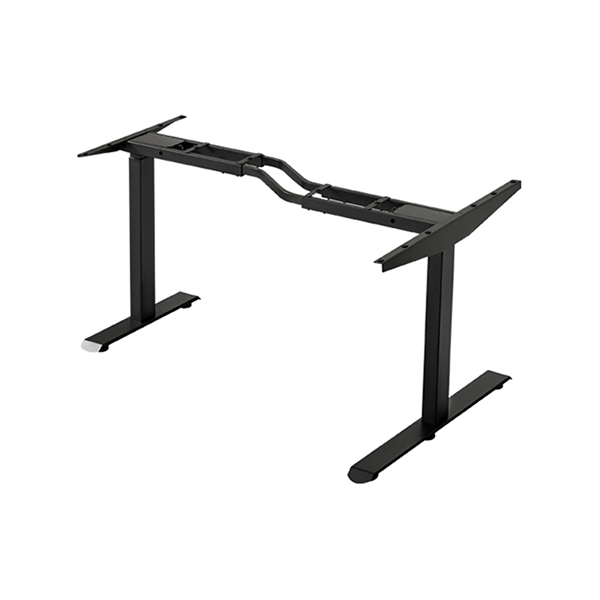
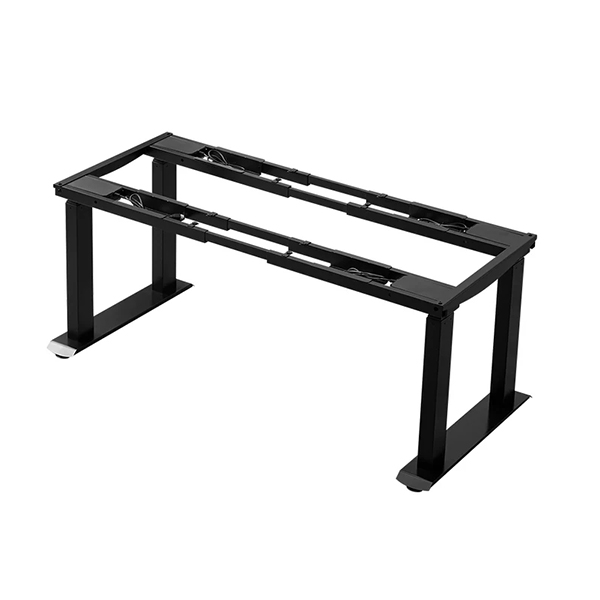
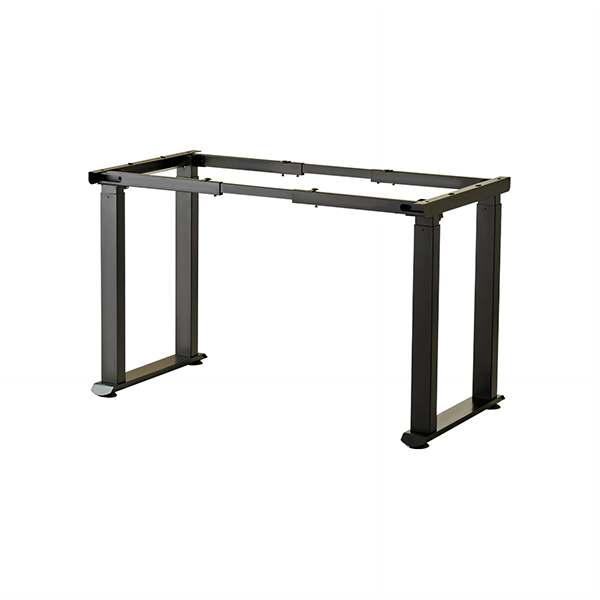
The frame or base — the structure that supports the surface and houses the adjustment mechanism.
The lifting columns — telescopic supports that change length as the desk moves.
The drive system — the motor, crank or spring that actually produces the movement.
The controls — a handset, switch or handle used to set the height.
These parts can be chosen separately in some products — for instance, a frame sold without a desktop — which is useful when a buyer wants a particular surface or size. A good desk is one where the parts are matched: a strong enough frame for the desktop's size and weight, a suitable drive for how often the height changes, and controls that are comfortable to operate.
Where Height Adjustable Desks Are Used
Offices — matching desks to individual users, and allowing seated and standing work in the same space.
Home offices — a single desk that adapts to different tasks and body positions.
Education and study — desks that suit students of different heights and activities.
Shared and hot-desking spaces — one desk that many users can set to their own preferred height.
Specialist settings — gamer, technical and technical-lab workstations where the surface must suit the equipment.
The common thread is variability: wherever the people or the tasks change, an adjustable surface is more useful than a fixed one. The height adjustable desk and adjustable desk products illustrate the range of sizes and layouts built on this principle.
What Makes a Desk Comfortable
An adjustable surface is one part of a comfortable workstation rather than the whole of it. Working comfortably depends on how the surface height relates to a few other elements:
Elbow height — for typing, the forearms should rest roughly level with the surface, so the working height should meet the user's seated or standing elbow position.
Monitor position — the top of the screen should sit near eye level, which often means raising the monitor when the desk is set for standing.
Chair height — on a seated desk, the chair and surface need to work together so the feet rest flat and the knees are not cramped.
Alternation — the ability to change between sitting and standing during the day matters as much as any single "correct" height.
This is why the height range of the desk matters more than any marketing feature. A desk that cannot reach a user's standing height, or one whose lowest setting is too high for comfortable seated work, will be less useful regardless of how well it is built.
Height Adjustable Desk vs Fixed Desk
A fixed desk has one height and is simplest and least expensive. A height adjustable desk adds a range, at the cost of a more complex base. The trade-off is worth it when:
more than one person uses the same desk and they differ in height;
the user wants to alternate between sitting and standing;
the desk must suit different tasks, such as computing and reading, at different heights;
the workspace needs to be reconfigured over time without replacing the furniture.
If none of these apply — a single user with a stable posture and one task — a fixed desk may be perfectly adequate. The adjustable desk earns its keep through change, not through being inherently superior in every case.
What to Consider Before Buying
Height range — enough travel to cover the seated and standing heights of the intended users.
Adjustment method — manual, spring-assisted or electric, according to how often the height changes.
Load capacity — supporting the desktop plus the equipment placed on it, with margin.
Stability — a rigid frame that keeps the surface steady when loaded and raised.
Desktop size — a surface large enough for the work, within the frame's supported range.
Control features — memory positions and safety limits if the desk is shared or powered.
Buyers who want a finished product can choose a complete desk, while those with an existing surface can start from an electric desk base and add a desktop. In both cases, matching range, load and stability to the real use of the desk is what makes the choice a good one.
FAQ
Is a height adjustable desk the same as a standing desk?
They describe the same kind of furniture. "Height adjustable desk" emphasises that the surface can move; "standing desk" emphasises standing work as a use case. Most products sold under either name can be used both sitting and standing.
Do I need an electric height adjustable desk?
Only if you will change the height often or share the desk. For a height that is set occasionally, a manual or spring-assisted desk is simpler and less costly. For frequent changes, electric adjustment is far more convenient.
What height range does a height adjustable desk need?
It must reach a comfortable seated height for the shortest user and a comfortable standing height for the tallest. For shared desks, choose a range that covers the full group, as the range cannot usually be extended later.
Can a height adjustable desk carry a large monitor or a heavy desktop?
It depends on the frame's load capacity. Total the desktop and equipment, add a margin, and choose a frame whose rating sits above that figure. Wider or heavier setups usually need a dual-motor or multi-column base.
Is height adjustment worth it for a single user who never stands?
It can still help, because the desk can be set precisely for that user's seated posture rather than to a fixed average. But the main benefit appears when the height changes — between users, tasks or positions.
Conclusion
A height adjustable desk is defined by a simple idea: the surface moves to suit the user. Manual, spring-assisted and electric systems deliver that idea with different levels of effort and convenience, and each is right for a different pattern of use. The desk is made of the same fundamental parts — desktop, frame, columns, drive and controls — and its usefulness comes from matching those parts to real needs, especially a height range that fits the people and a load capacity that suits the equipment. Chosen with those points in mind, a height adjustable desk is a flexible foundation for a workspace that changes as its users do.
References
ISO 9241-5:1998. Ergonomic requirements for office work with visual display terminals (VDTs) — Part 5: Workstation layout and postural requirements. International Organization for Standardization.
Occupational Safety and Health Administration (OSHA). Computer Workstations eTool — Workstation Components. U.S. Department of Labor.
Cornell University Ergonomics Web (CUErgo). Sitting and Standing at Work. Cornell University.
ANSI/BIFMA X5.5-2021. Desk and Table Products. BIFMA International.
Dul, J., & Weerdmeester, B. (2008). Ergonomics for Beginners: A Quick Reference Guide (3rd ed.). CRC Press.
Langfang Hanger Intelligent Technology Co., Ltd.
Copyright © 2026-2027 https://www.handyersmart.com. All Rights Reserved Langfang Hanger Intelligent Technology Co., Ltd.Copyright