






 Current location:
What Is a Standing Desk and How Does It Work? A Guide
Author:handyersmart Date:2026-10-11 08:44:11 Click:124
A standing desk is a work table whose surface height can be changed so that a person can work while seated, while standing, or while moving between the two. The idea is simple: instead of forcing a fixed posture on the user, the desk adapts its height to the task and the body. What makes the product worth studying, however, is not the concept but the mechanism underneath it — the frame, the lifting columns, the adjustment system and the load they are designed to carry. This article explains what a standing desk is, how it works mechanically, and what those details mean for anyone specifying or buying one.
What Is a Standing Desk?
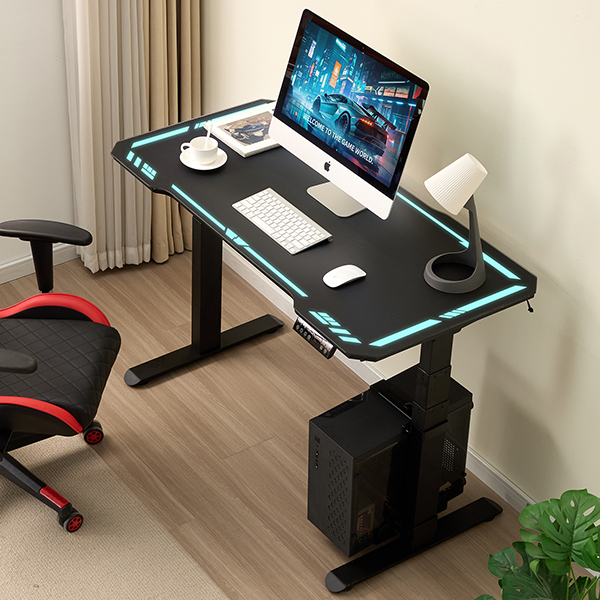
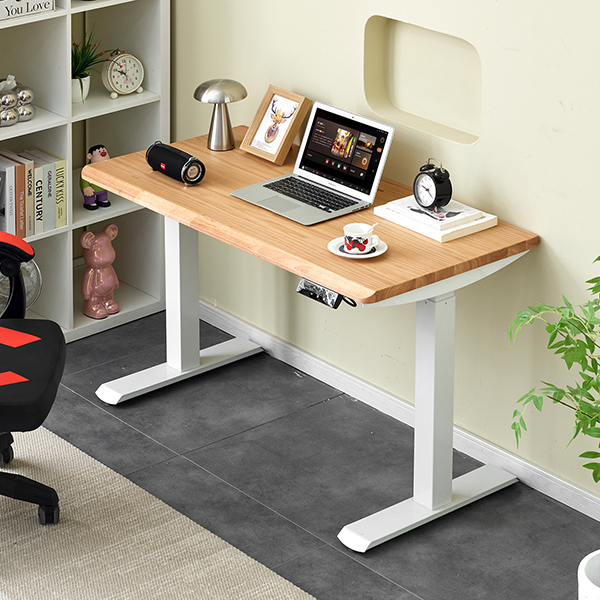
A standing desk is a height-adjustable workstation designed to support both seated and standing work. In older furniture catalogues the same product is often labelled a height adjustable desk or a sit stand desk, and the three terms describe the same family of furniture rather than three different categories. A fixed desk has one working height that suits an average seated posture; a standing desk adds a second dimension, letting the user raise the surface for standing work and lower it again for sitting.
That adjustment is not a convenience feature bolted onto a normal table. The whole structure is engineered around it. The frame must stay rigid while it moves, the lifting columns must raise a loaded desktop evenly, and the control system must keep the surface level. Whether the adjustment is done by hand or by motor, the performance of the desk is decided by how well these parts work together.
The Core Components of a Standing Desk
Although models differ, most standing desks share the same four building blocks. Understanding them makes it much easier to compare products, because specifications almost always describe one of these parts.
The Desktop
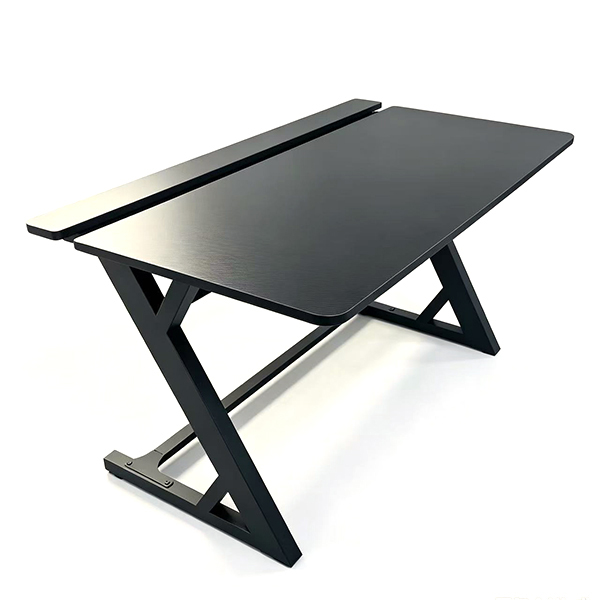
The desktop is the working surface. Its material, thickness and dimensions affect both the appearance of the desk and how the frame behaves underneath it. A larger or heavier desktop places more demand on the frame, so desktop size and frame capacity should always be considered together rather than independently. Many suppliers offer the frame and the desktop as separate choices so that buyers can match a surface to their room and their equipment.
The Frame and Lifting Columns
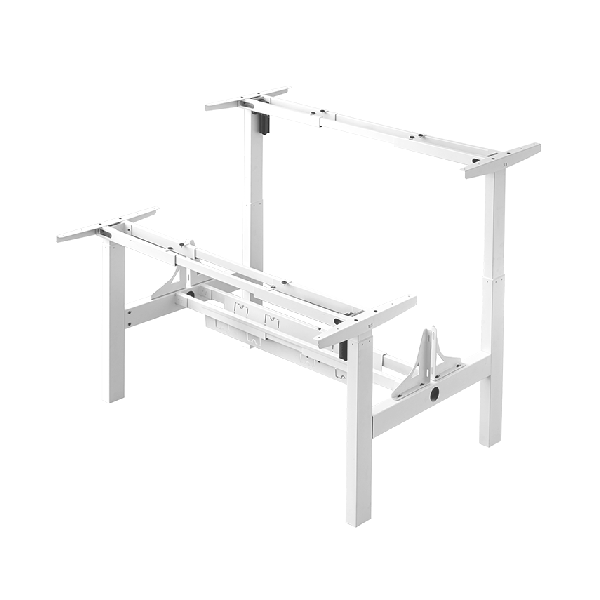
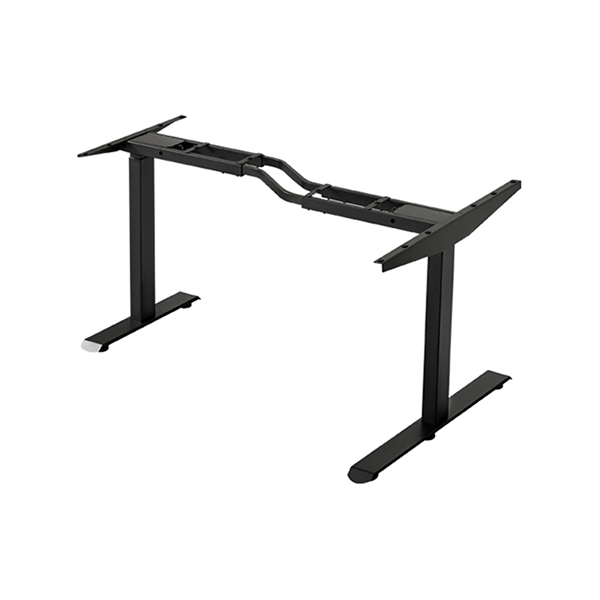
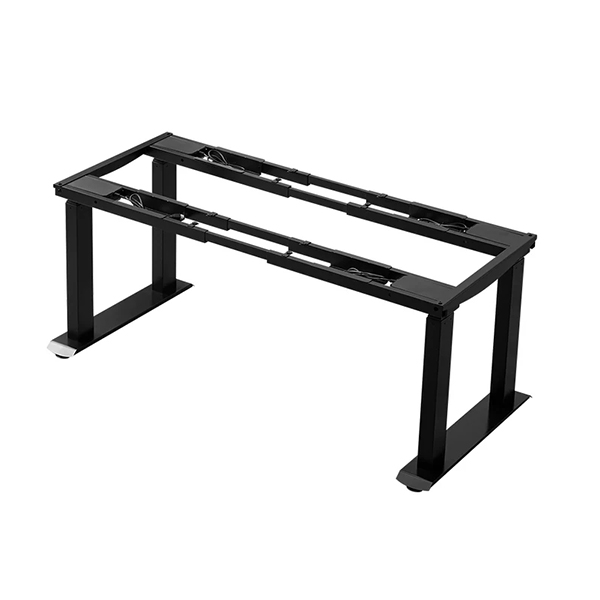
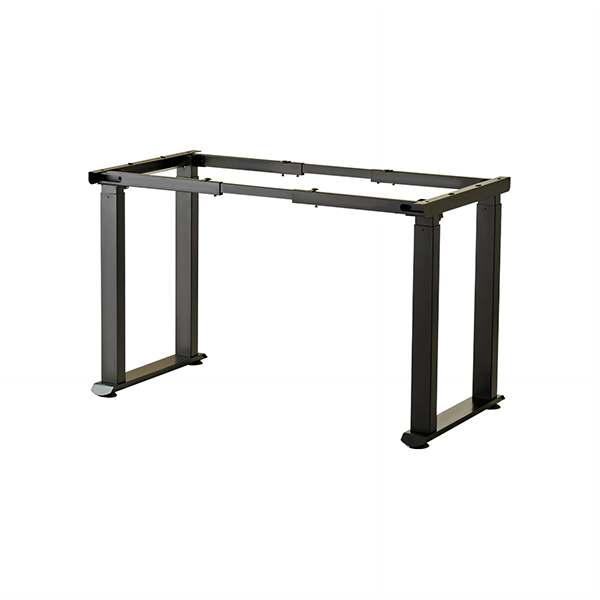
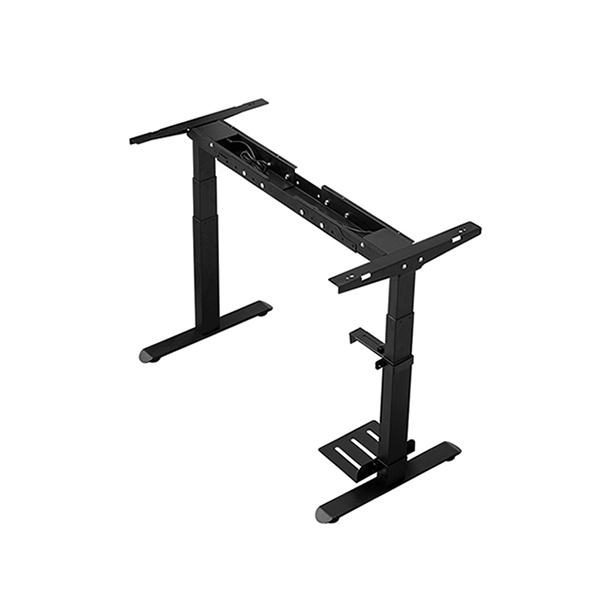
The frame is the structure that supports the desktop and carries the height-adjustment mechanism. Its most visible parts are the lifting columns — telescopic legs that extend and retract as the desk rises and falls. Inside each column sit the sliding stages and, on an electric desk, the motor-driven actuator that moves them. A frame can be built around two, three or four columns, and the number of columns is one of the clearest signals of how much load and what desktop size the desk is intended for. You can read a fuller breakdown in the guide to electric standing desk frames, which covers how the columns and motors are arranged.
The Adjustment Mechanism
The adjustment mechanism is what converts user input into vertical movement. On a manual desk it is a crank, a gas spring or a counterbalance system. On an electric desk it is a set of motors, a control box and a handset or control panel. This single part is usually the biggest difference between one standing desk and another, and it decides how smooth, how fast and how convenient the desk is to use.
How Does a Standing Desk Work?
All standing desks work on the same principle: the desktop is attached to telescopic supports, and the length of those supports is changed to move the surface up or down. The method used to change that length is what separates manual from electric desks.
Manual Height Adjustment
A manual standing desk relies on the user's own effort or stored mechanical force. A crank-based desk uses a handle that the operator turns to drive the lifting mechanism; a gas-spring or counterbalance design uses a spring to offset part of the desktop's weight so that a lighter push is enough to reposition the surface. Manual desks are mechanically straightforward and need no power supply, which keeps them simple to install and maintain. The trade-off is speed and precision: changing height takes physical effort, and the user has to judge and set the level by hand.
Electric Height Adjustment
An electric standing desk replaces manual effort with motors. Each lifting column contains or is linked to a motorised actuator, and the motors are coordinated by a control box. When the user presses the handset, the control box drives the columns together so the desktop rises or falls while staying level. Electric desks are generally faster and more consistent than manual ones, and because the movement is powered, they can be operated without interrupting work. The control panel is also where extra functions live, such as memory presets that return the desk to stored sitting and standing heights, and safety features that stop movement when an obstacle is detected.
What Happens to the Desk During Adjustment
As the desk moves, several things happen at once. The lifting columns extend or retract, changing the working height. The frame is designed to keep the desktop level across its width, so that one side does not rise faster than the other. The control system monitors the columns and, on well-designed desks, limits travel at the top and bottom of the height range to protect the mechanism. Because the desktop is often loaded with monitors, computers and equipment, the frame and columns are sized to carry that load through the full range of movement, not just at rest.
Main Types of Standing Desks
Electric standing desks — motorised height adjustment with a control panel; suited to frequent height changes and shared workstations.
Manual standing desks — crank or spring-assisted adjustment; no power needed and mechanically simple.
Standing desk frames only — the base and lifting system without a desktop, for buyers who want to supply their own surface. See the range of standing desk products for examples.
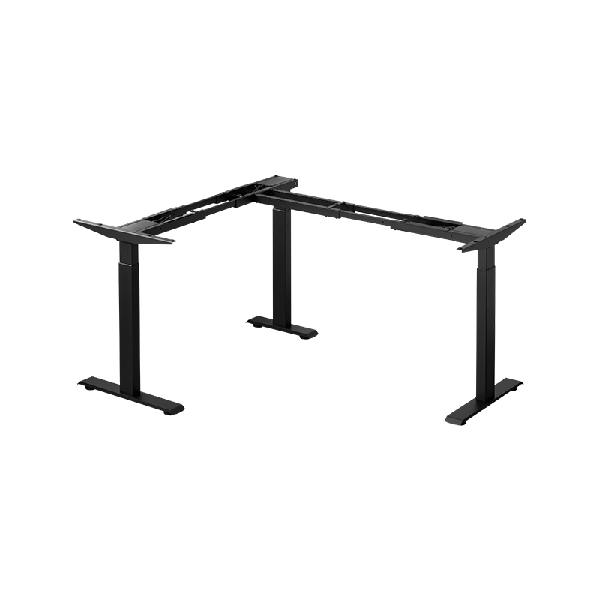
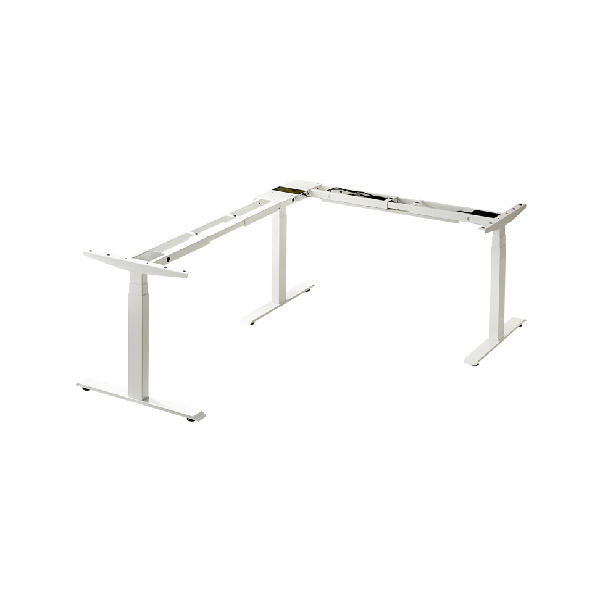
Specialised layouts — four-leg, L-shaped, corner and dual-workstation configurations for larger or shared work areas, built on wider frames and additional columns.
Why People Use Standing Desks
The main reason people move to a standing desk is posture and movement. A fixed-height desk tends to lock a user into one seated position for long periods. A height-adjustable surface lets the user change position during the day, which can make it easier to keep the wrists, elbows, neck and monitor at comfortable relative positions when the surface is raised. Ergonomic guidance from institutions such as OSHA's computer workstation eTool treats the ability to match the workstation to the user as a core principle, and a standing desk is one way to apply that principle across both seated and standing postures.
There is also an operational argument for the product. Meeting rooms, education spaces and training areas often need one table that works for seated discussion and for standing presentations. In those environments a height-adjustable desk gives the same piece of furniture two usable modes instead of requiring two separate tables.
What to Consider Before Choosing a Standing Desk
Once the mechanism is understood, a standing desk can be judged on a small number of practical points:
Height range — the desk must reach a comfortable seated height and a comfortable standing height for its user or users.
Load capacity — the frame and columns must support the intended desktop plus monitors and equipment, with margin to spare.
Number and type of columns — two columns suit compact, single-user desks, while three or four columns suit wider and heavier setups.
Adjustment method — choose manual or electric according to how often the height will change and whether a power supply is available.
Stability — a rigid frame keeps the surface steady during typing, writing and screen work, especially at higher settings.
Desktop compatibility — on frame-only products, confirm the desktop size and thickness the frame is designed to accept.
Because these factors are linked — a larger desktop needs a stronger frame, more frequent adjustment favours electric drive — it is worth treating the desk as a system rather than a single part. Buyers who want to build around an existing surface can start from a frame and add a desktop, while those who want a finished product can choose a complete desk.
FAQ
Is a standing desk the same as a height adjustable desk?
In practice, yes. "Standing desk" and "height adjustable desk" describe the same category of furniture: a work table whose surface can be raised and lowered. Manufacturers sometimes use one term for electric models and the other for the whole family, but the underlying product is the same.
Do I have to stand all day to use a standing desk?
No. The purpose is to change position, not to stand continuously. Most users alternate between sitting and standing during the day and adjust the desk accordingly, which is why smooth, quick height changes matter.
How do I know what height range I need?
Match the range to the users of the desk. A seated working height is generally lower than a standing one, and taller users need a higher top of range. For shared desks, choose a range that covers the shortest and tallest users expected to use it.
Can I buy a standing desk frame without a desktop?
Yes. Frame-only products are designed exactly for that. You supply a desktop that matches the frame's supported size and thickness, and the frame supplies the lifting system and structure. This is a common route for custom or oversized surfaces.
Are electric standing desks noisy?
Sound levels vary by design, but a well-built electric desk moves more quietly than people expect. If noise matters — for example in open offices — it is worth asking the supplier about operating sound under load rather than assuming a value.
Conclusion
A standing desk is a height-adjustable work table whose real character lies in its frame, lifting columns and adjustment mechanism. Manual models trade convenience for mechanical simplicity; electric models trade complexity for speed, consistency and useful control features. Whatever the type, the desk should be selected as a system — height range, load capacity, column configuration and desktop compatibility considered together — so that it suits the people and the tasks it will serve. Buyers who understand that structure can compare standing desks on the factors that actually affect daily work rather than on marketing claims.
References
Buckley, J. P., Hedge, A., Yates, T., Copeland, R. J., Loosemore, M., Hamer, M., Bradley, G., & Dunstan, D. W. (2015). The sedentary office: an expert statement on the growing case for change towards better health and productivity. British Journal of Sports Medicine, 49(21), 1357–1362.
Thorp, A. A., Kingwell, B. A., Sethi, P., Hammond, L., Owen, N., & Dunstan, D. W. (2014). Alternating bouts of sitting and standing attenuate postprandial glucose responses. Medicine & Science in Sports & Exercise, 46(11), 2053–2061.
Cornell University Ergonomics Web (CUErgo). Sitting and Standing at Work. Cornell University.
ANSI/BIFMA X5.5-2021. Desk and Table Products. BIFMA International.
Occupational Safety and Health Administration (OSHA). Computer Workstations eTool — Workstation Components. U.S. Department of Labor.
Langfang Hanger Intelligent Technology Co., Ltd.
Copyright © 2026-2027 https://www.handyersmart.com. All Rights Reserved Langfang Hanger Intelligent Technology Co., Ltd.Copyright